

Farm-to-table dining connects you with locally sourced, nutrient-rich foods while supporting a healthier lifestyle. By prioritizing fresh, seasonal ingredients and reducing preservatives, this approach offers several benefits for both your body and mind. Here’s a quick look at how it helps:
- Boosts Nutrition: Shorter time from harvest to table preserves more vitamins and antioxidants.
- Encourages Mindfulness: Promotes intentional eating and reduces stress.
- Seasonal Variety: Provides naturally nutrient-dense produce throughout the year.
- Fewer Chemicals: Limits exposure to synthetic additives and pesticides.
- Better Flavor: Naturally ripened foods taste richer and more satisfying.
- Builds Connection: Strengthens ties with local farmers and the land.
- Supports Eco-Friendly Practices: Reduces food miles and promotes sustainable farming.
Milk & Honey Ranch exemplifies this philosophy by offering locally sourced meals alongside wellness-focused activities like hiking, spa treatments, and farm experiences. It’s a complete approach to nourishing your body and connecting with nature.
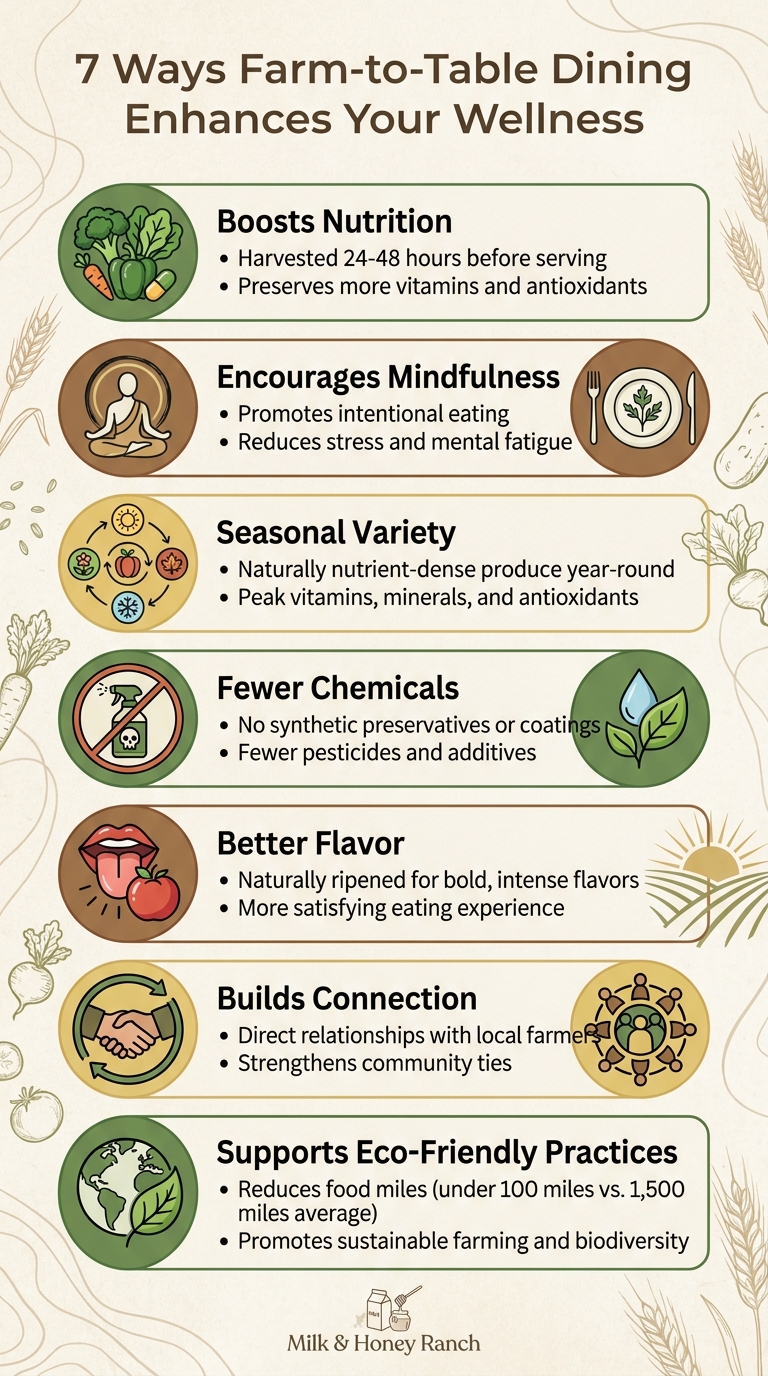
7 Ways Farm-to-Table Dining Enhances Wellness Infographic
1. Provides Fresher Food with More Nutrients
Nutritional Value and Freshness of Ingredients
When produce spends days – or even weeks – traveling on a truck, it starts losing the nutrients your body craves. Vitamin C, for instance, begins to break down almost immediately after harvesting. Farm-to-table dining changes the game by offering produce that’s often harvested just 24–48 hours before it reaches your plate. This shorter time frame means these foods retain far more water-soluble vitamins, minerals, and antioxidants compared to store-bought produce, which may have been picked weeks earlier.
Supermarket produce is often picked before it’s fully ripe to survive long shipping times. In contrast, farm-to-table ingredients are allowed to ripen naturally, which not only enhances their nutrient content but also their flavor. After harvest, fruits and vegetables undergo a process called post-harvest respiration, during which nutrients slowly deplete. By reducing the time from farm to table, this dining approach helps lock in those essential nutrients.
"Locally sourced farm-to-table ingredients can better hold onto the nutrients lost during shipment because it reduces the period between when produce gets picked and when it arrives on your table." – Fresh Meal Plan
Farm-to-table produce skips the long storage times and avoids artificial preservatives, meaning you get food with peak antioxidant levels and unaltered flavor. It’s food as nature intended – fresh, nutrient-packed, and pure.
At Milk & Honey Ranch, the ingredients are either freshly harvested from their gardens or sourced from trusted local farmers. This ensures that every meal is made with produce at its nutritional peak. Not only does this approach maximize the health benefits of each dish, but it also elevates the dining experience, making it both mindful and deeply satisfying.
sbb-itb-4d247d1
2. Encourages Mindful Eating and Reduces Stress
Impact on Mental Well-Being and Mindfulness
Farm-to-table dining aligns with the rhythm of local farming, creating a slower, more intentional eating experience. This approach can help ease stress and mental fatigue, encouraging you to savor each bite and truly enjoy your meal.
Knowing exactly where your food comes from – right down to the farm – can relieve the worries often tied to modern eating habits. This transparency brings a sense of calm and reassurance, making meals less about stress and more about enjoyment.
"A diet rich in vitamins, minerals, and antioxidants can improve mood, reduce anxiety, and enhance cognitive function, providing a foundation for mental health." – Medcom Benefit Solutions
Fresh, unprocessed produce offers authentic flavors and textures that naturally encourage mindfulness. Each bite becomes an opportunity to focus on the present moment and appreciate the care that went into growing the food.
At Milk & Honey Ranch, meeting the farmers adds another layer to this experience. It deepens the connection between the food on your plate and the community behind it. This interaction transforms dining into a thoughtful, intentional act, supporting both mental well-being and a more mindful approach to eating.
3. Offers Seasonal Variety for Better Nutrition
Nutritional Benefits of Seasonal Choices
When produce is grown and harvested in its natural season, it tends to pack more vitamins, minerals, and antioxidants compared to food picked early and transported long distances. This happens because seasonal crops thrive under optimal conditions – natural sunlight, water, and nutrient-rich soil – which enhances their nutrient density. For instance, oranges are richer in vitamin C when they’re harvested during their natural growing season. As Kelsey Loupy, PhD, explains, harvesting produce in season ensures it reaches its peak levels of vitamins, minerals, and antioxidants.
Another perk of eating seasonally is the shorter time between harvest and your plate. This reduces nutrient loss, preserving key micronutrients like polyphenols, which play a role in supporting your body’s antioxidant and anti-inflammatory defenses.
Different seasons also bring a natural rotation of nutrients to your diet. Summer berries, for example, are packed with fiber, while winter root vegetables are excellent sources of beta-carotene. This variety ensures your body gets a broad range of nutrients throughout the year, keeping your diet balanced and fresh.
At Milk & Honey Ranch, seasonal menus are crafted around what’s currently growing, so you’re always enjoying food at its peak nutritional value.
4. Reduces Preservatives and Chemicals in Your Diet
Nutritional Value and Freshness of Ingredients
When it comes to eating healthier, cutting out synthetic additives plays a huge role. One standout benefit of farm-to-table dining is the absence of unnecessary chemicals in your food. Traditional supermarket produce often travels hundreds – or even thousands – of miles before it reaches your plate. To survive the long journey, these foods are treated with synthetic preservatives and chemicals to extend their shelf life. Farm-to-table ingredients, on the other hand, are typically harvested and served within days – or even hours – of being picked, eliminating the need for these additives.
In grocery stores, produce is often coated with wax to retain moisture during transport. Additionally, it’s often picked before it fully ripens to handle the tough conditions of shipping. Farm-to-table produce avoids these methods entirely. It’s harvested at peak ripeness and delivered quickly, letting you enjoy fruits and vegetables in their purest, most natural form – free from chemical ripening agents or synthetic coatings.
Local farmers who supply directly to consumers or restaurants also tend to use fewer pesticides and synthetic fertilizers compared to large-scale industrial farms. Many farm-to-table providers go a step further, focusing on non-GMO crops and raising animals without antibiotics or growth hormones.
Another key point: produce starts losing nutrients the moment it’s harvested. By cutting down the time between harvest and consumption, farm-to-table dining helps retain these essential nutrients. This approach not only keeps your meals chemical-free but also supports your overall health and well-being.
5. Improves Flavor and Meal Enjoyment
Nutritional Value and Freshness of Ingredients
Farm-to-table dining is all about freshness. When local produce is harvested just a day or two before it lands on your plate, fruits and vegetables have the chance to ripen naturally, delivering bold, intense flavors. Think sweeter strawberries, juicier tomatoes, and greens that actually taste vibrant. Compare that to grocery store produce, which often spends weeks in transit and loses much of its flavor along the way. This freshness doesn’t just make your meal taste better – it transforms the entire eating experience into something more satisfying.
"Most chefs and home cooks probably agree that the freshest ingredients tend to produce the best-tasting dishes."
- Lizzie Streit, MS, RDN, LD, Healthline
Impact on Mental Well-Being and Mindfulness
When food tastes this good, it’s easier to slow down and savor each bite. This deeper connection to your meal encourages mindful eating, which can leave you feeling more satisfied and even boost your mental well-being.
"I feel more satisfied and mindful when I have a connection to the food that I eat."
- Lizzie Streit, MS, RDN, LD
Farm-to-table restaurants often reflect the natural, unhurried pace of local farming. The relaxed atmosphere, paired with the vibrant colors and authentic textures of fresh, unprocessed ingredients – free from wax coatings and artificial preservatives – creates a dining experience that’s as calming as it is delicious.
6. Builds Connection to Nature and Community
Impact on Mental Well-Being and Mindfulness
Farm-to-table dining replaces the mystery of anonymous supply chains with direct, meaningful relationships between diners, chefs, and farmers. Instead of guessing where your food came from, you can often trace it back to a specific farm or producer. Many farm-to-table restaurants highlight these connections by listing the names of farms, fishing boats, or even local beekeepers on their menus. It’s like a "gratitude list" that honors everyone involved in bringing your meal to the table. This transparency turns a simple meal into a more intentional and mindful experience, fostering a sense of community and purpose that can positively impact mental well-being.
"The farm-to-table movement is not nostalgia, nor a marketing flourish; it is a reclamation of intimacy with the land."
- Lynsey Logan, Writer
This sense of connection doesn’t just feed the soul – it also encourages practices that benefit the environment.
Support for Sustainability and Eco-Friendly Practices
Farm-to-table dining also strengthens local economies and promotes environmentally friendly habits. By keeping money circulating within the community, it bolsters regional food systems. Consider this: the average produce item in the U.S. travels about 1,500 miles before it lands on your plate. In contrast, farm-to-table ingredients typically travel under 100 miles. This shorter journey cuts down on environmental strain, reducing the need for refrigerated transport, plastic packaging, and chemical preservatives or coatings.
Want to feel even more connected? Visit farmers’ markets to chat with growers about their methods or join a Community Supported Agriculture (CSA) program to receive fresh, seasonal produce regularly. Studies even suggest that people involved in local food networks, like community gardening, tend to have lower body mass indexes, showing that these practices can benefit both the planet and personal health.
7. Supports Eco-Friendly Practices for Long-Term Health
Local Farming and Environmental Benefits
Opting for farm-to-table dining does more than just upgrade your plate – it also contributes to a healthier planet and personal well-being. When farmers focus on selling their produce locally, they can skip the heavy use of chemicals designed to make food last during long shipping journeys. This means fewer synthetic pesticides and fertilizers end up in the environment, which helps protect ecosystems and reduce pollution.
"Local farms that use sustainable practices may boost biodiversity, protect pollinators that are vital to healthy ecosystems, and promote clean air, water, and soil." – Lizzie Streit, MS, RDN, LD
Local sourcing also cuts down on transportation distances, which lowers emissions and reduces the need for excessive packaging. It’s a win-win for the environment and your dinner table.
Fresher Ingredients, Better Nutrition
This eco-conscious approach doesn’t just help the planet – it’s better for your health, too. Shorter travel times mean your food retains more of its nutrients. For example, vitamin C, which supports skin and tissue health, starts to degrade soon after harvest. Similarly, antioxidants, which fight harmful free radicals, diminish during extended storage.
When you buy produce that’s been harvested within a day or two – or even the same morning at a farmers’ market – you’re getting fruits and vegetables at their peak nutritional value. Plus, by supporting local food systems, you’re strengthening your community while nourishing your body. It’s a simple practice that promotes long-term wellness for both people and the planet.
Rooted in Gratitude: Farm to Table | BWR Meditation Ep. 122
Conclusion
Farm-to-table dining goes beyond just a meal – it’s a choice that directly supports your well-being, from improving physical health to making a positive impact on the environment. By embracing this approach, you enjoy nutrient-packed produce and gain clarity about where your food comes from. At the same time, you’re reducing exposure to synthetic chemicals, backing farming methods that care for local ecosystems, and fostering stronger ties within your community.
Milk & Honey Ranch embodies these ideas, offering meals that highlight local ingredients and sustainable practices. The experience is about more than food – it’s about connection. Alongside their thoughtfully crafted dishes, the ranch invites you to engage in hands-on farm activities, enjoy wellness spa treatments, and explore recreational opportunities. These experiences underscore how the shorter journey from farm to table preserves nutrients and minimizes environmental impact.
"Dining at Milk & Honey Ranch is more than a meal – it’s a celebration of connection, creativity, and the land we’re blessed to steward." – Milk & Honey Ranch
This approach transforms dining into a tribute to health, community, and the natural world – nourishing not just your body, but also your relationships and the planet.
FAQs
How can I tell if a meal is truly farm-to-table?
To spot a genuine farm-to-table meal, look for clear information about where the ingredients come from. True farm-to-table dishes rely on fresh, locally-sourced ingredients, with the farms or regions often mentioned by name. Freshness is a major clue – ingredients are usually harvested at their peak and brought to the kitchen without delay. Don’t hesitate to ask about the supply chain or farming practices; real farm-to-table restaurants often work directly with local farmers to ensure quality and authenticity.
Is farm-to-table always organic or pesticide-free?
Farm-to-table dining emphasizes fresh ingredients sourced from local farms, bringing a sense of community and seasonality to the table. However, it’s important to note that farm-to-table doesn’t automatically mean the food is organic or free of pesticides. While some suppliers may adhere to organic farming methods or avoid pesticides, others may not have official organic certifications or follow strict pesticide-free practices. Always check with the provider if these details are important to you.
What’s the easiest way to start eating more seasonally at home?
Using locally-sourced, in-season foods is one of the simplest ways to elevate your meals. Begin by shopping for fresh produce that’s naturally grown in your region. Building your meals around seasonal ingredients makes everything easier. Plus, it guarantees fresher, more flavorful, and nutrient-packed dishes – no fancy gadgets or complicated prep required.