
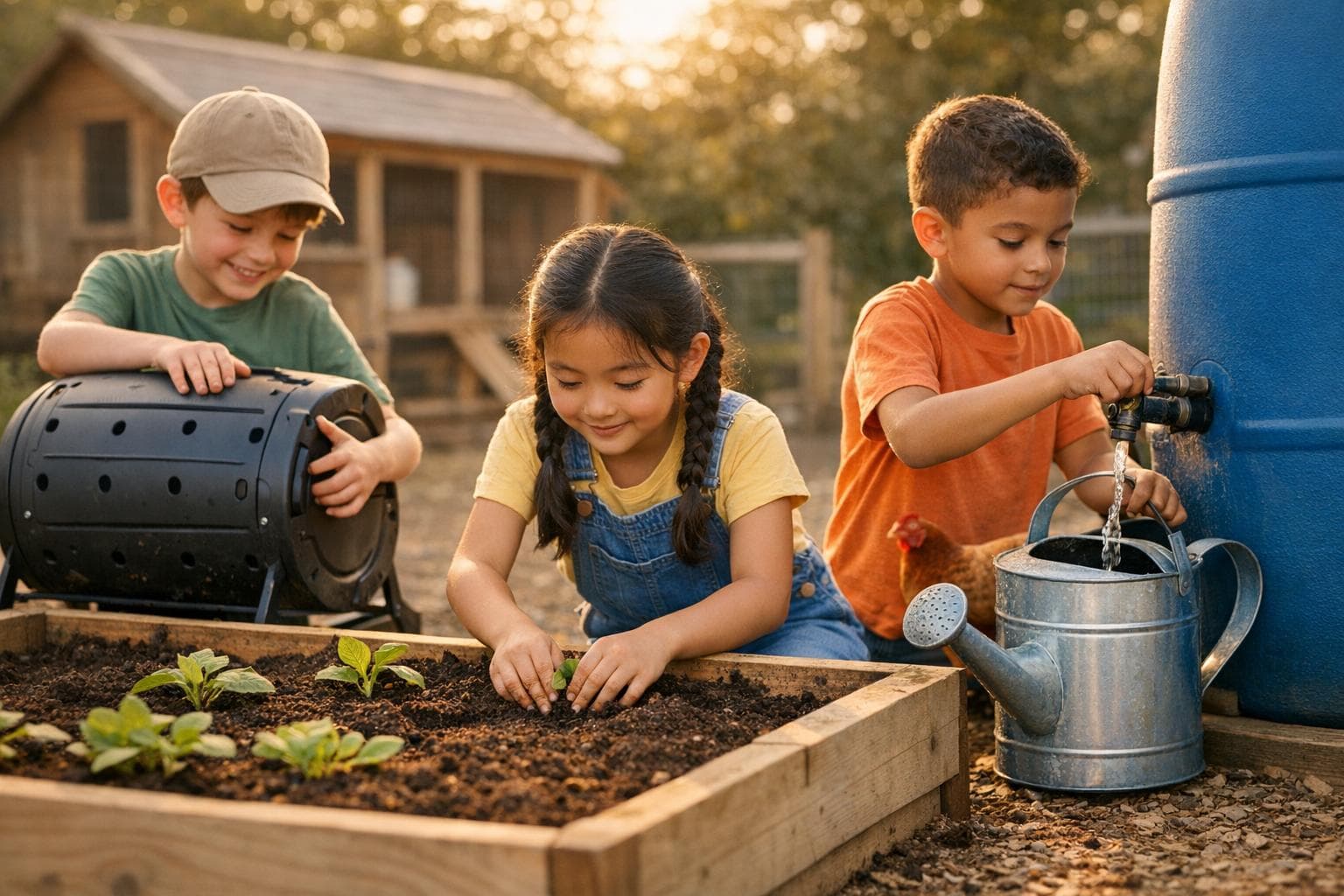
Farms are an excellent place for kids to learn hands-on lessons about how nature and our daily habits impact the planet. From composting food scraps to planting trees, these activities help children connect with where food comes from and how ecosystems work together. Here’s a quick rundown of the 10 activities covered:
- Composting Kitchen Scraps: Turn waste into nutrient-rich soil while teaching the basics of recycling.
- Planting a Vegetable Garden: Grow food from seed to harvest, showing the effort behind every meal.
- Caring for Farm Animals: Learn responsibility by feeding and observing animals like chickens or goats.
- Collecting Rainwater for Irrigation: Teach water conservation by capturing and reusing rainwater.
- Making a Worm Farm: Explore decomposition and soil health with red wigglers.
- Farm-to-Table Harvest Cooking: Prepare meals using freshly picked produce, connecting food to its source.
- Building a Mini Greenhouse: Create a simple setup to grow plants in small spaces.
- Sorting and Recycling Farm Waste: Understand waste management by separating trash, compost, and recyclables.
- Learning About Renewable Energy on the Farm: See solar panels or wind turbines in action and build a solar oven.
- Planting Trees Along Trails: Help the environment by planting trees that provide oxygen and stabilize soil.
Each activity is simple to set up and helps kids develop habits that protect the planet. These lessons are easy to apply at home, in schools, or on visits to places like Milk & Honey Ranch, where families can experience these ideas firsthand.
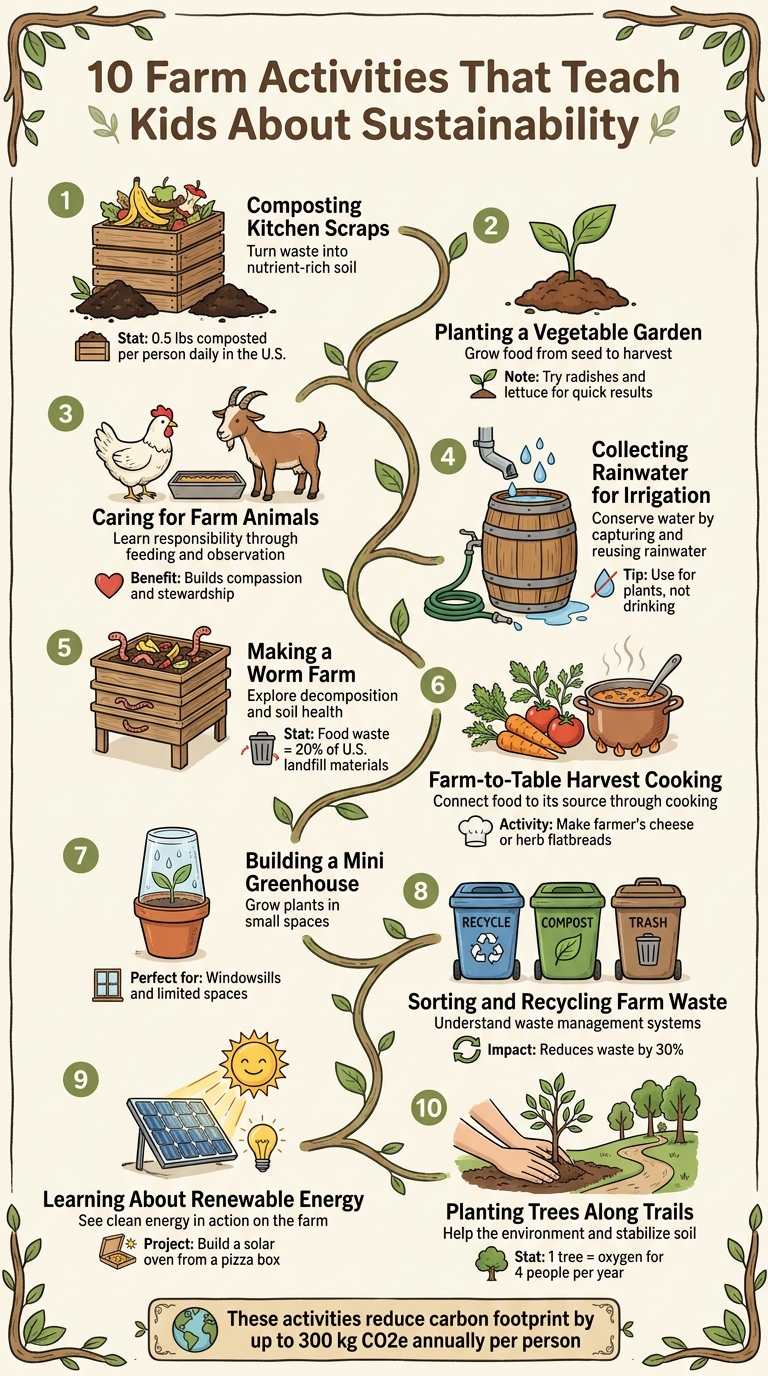
10 Farm Activities That Teach Kids About Sustainability
1. Composting Kitchen Scraps
Hands-on Engagement for Children
Composting kitchen scraps is like a mini science experiment kids can dive into. They get to gather fruit peels, vegetable scraps, and eggshells, mix them with shredded paper, cardboard, and dry leaves, and toss it all into a compost bin. Regularly stirring the mix introduces oxygen, which helps break everything down. Kids can even use a meat thermometer to check the temperature difference between the center and the surface, showing how microbes are hard at work. This hands-on activity not only makes waste management fun but also introduces kids to the basics of recycling and eco-friendly habits.
Educational Value on Sustainability
In the U.S., each person composts about 0.5 pounds of food and yard trimmings daily, helping to cut down on greenhouse gas emissions. By maintaining a simple 2:1 ratio of brown materials (like dry leaves or shredded paper) to green materials (like apple cores), kids learn how to manage waste responsibly. It’s a straightforward way to introduce the principles of sustainable living. Rick Carr, Farm Director at Rodale Institute, emphasizes the importance of this balance: "Food waste should always be covered with some brown material. If you do that, you’ll avoid having any issues with flies, odors, or angry neighbors." Watching kitchen scraps transform into rich, earthy compost over one to six months also teaches patience and an appreciation for natural cycles.
Alignment with Eco-Conscious Habits
"Kids start to look at waste not as trash but as something that has another life." – Juliane Crump, Founding Member of the Planeteers
This shift in perspective happens naturally when kids see banana peels turn into soil that helps grow new plants. They also learn what can and can’t go into the compost bin – steering clear of items like meat, dairy, fish, and fats to avoid pests. For families in urban areas, a lidded plastic bin with added airflow makes composting doable even in small spaces. To take it a step further, kids can experiment by planting seeds in different soil mixtures – like 25% compost versus 100% garden soil – and see how nutrients affect plant growth. It’s a simple yet powerful way to connect them to the cycle of life.
sbb-itb-4d247d1
2. Planting a Vegetable Garden
Hands-on Engagement for Children
Letting kids dig into their own vegetable garden is a fantastic way to bring sustainability to life. It’s more than just planting – it’s about using their senses to explore. Start with quick growers like radishes and lettuce. Radishes, for instance, sprout in just a few days, which keeps the excitement alive. Another fun idea? A "Pizza Garden" filled with cherry tomatoes, peppers, and basil – this connects what they grow to meals they love. You can even use cardboard egg cartons for starting seeds. They decompose right in the soil, cutting down on plastic waste. To make it even more special, give them kid-sized tools so they can truly take ownership of their garden. This hands-on activity pairs perfectly with composting, helping kids understand how organic cycles work.
Educational Value on Sustainability
A vegetable garden offers kids a front-row seat to the "seed to table" journey. They learn where food really comes from and appreciate the effort it takes to grow it. This connection often leads to less food waste – when kids grow their own carrots or tomatoes, they value every bite. Watching a tiny seed transform into a fully grown plant teaches patience and respect for nature’s resources. Dr. Manasa Mantravadi, Founder of Ahimsa, puts it beautifully:
"Gardening with kids isn’t just about planting seeds and watching them grow. It’s about fostering nature appreciation, sustainable practices, and quality family time".
Practicality for Families or Educators
You don’t need a big backyard to make gardening work. A small 4×4-foot raised bed or even a sunny windowsill with containers can provide the same learning opportunities. Look for a spot that gets 6 to 8 hours of sunlight daily, clear away any weeds or rocks, and mix in compost to enrich the soil. For little hands, start with large seeds like beans, peas, or sunflowers – they’re easy to handle and plant. Add a creative twist by having kids make DIY plant markers from popsicle sticks or smooth rocks. This adds a touch of literacy and creativity to the process. Collecting rainwater in barrels for irrigation is another great way to show kids the importance of conserving resources.
Alignment with Eco-Conscious Habits
The magic truly happens at harvest time. Encourage kids to save seeds from sunflowers or beans for planting the next year. This simple act completes the sustainable cycle. As The Slow Childhood explains:
"Seed saving closes the circle of the garden year – children see that plants make seeds that become new plants, and that saving seeds is how communities have sustained themselves for thousands of years".
Teach organic gardening methods by using compost to enrich the soil and opting for natural pest control to protect helpful insects like bees. These small steps not only nurture the garden but also instill eco-friendly habits that can last a lifetime.
3. Caring for Farm Animals
Hands-on Engagement for Children
Taking care of farm animals gives kids a chance to connect with living creatures in meaningful ways. Start small with simple tasks like filling water buckets, scattering feed, or gathering fresh eggs from the coop. These activities not only teach responsibility but also show kids how their actions directly affect the well-being of animals. Encourage quiet observation – like watching how a chicken reacts when startled – to help them understand animal behavior. Turn routine chores into creative opportunities by involving them in decorating shelters or cleaning stalls. Even activities like searching for animal tracks or nests can spark curiosity about how animals interact with their environment. This hands-on involvement lays the groundwork for understanding broader farm practices.
Educational Value on Sustainability
Caring for animals teaches kids the basic needs of life: food, water, shelter, and space. These lessons naturally tie into ecological sustainability. Kids start to realize that milk comes from cows, eggs from chickens, and wool from sheep – not just from a store shelf. This awareness fosters a deeper appreciation for the effort behind producing food and materials. Much like gardening or composting, animal care shows how different elements of a farm work together as part of a sustainable system. Patty Born Selly, Executive Director of the National Center for STEM Elementary Education, highlights this connection:
"As children have experiences with animals, they learn about differences and similarities, needs (such as for food, shelter, water and space), and compassion and empathy can grow and deepen".
Practicality for Families or Educators
Teaching kids about animal care doesn’t require a full-scale farm. A small backyard coop with a few chickens can teach valuable lessons about responsibility and sustainability. For families or schools with access to larger animals like goats or sheep, kids can learn how grazing helps manage cover crops, improves soil health, and reduces the need for harvested feed. These practical experiences reinforce the idea that every part of a farm ecosystem is connected.
Alignment with Eco-Conscious Habits
Studies suggest that kids who care for animals often develop a stronger sense of compassion toward plants and the environment. Patty Born Selly emphasizes:
"By supporting children’s love for animals, you’re helping nurture those all-important feelings of connection and stewardship as well".
Encourage children to think about the bigger picture. Show them how bees pollinate crops, worms turn food scraps into fertilizer, and protecting fence-line habitats supports wild pollinators. These lessons complement other sustainable practices on the farm, creating a well-rounded understanding of how ecosystems thrive together.
4. Collecting Rainwater for Irrigation
Hands-on Engagement for Children
Getting kids involved in water conservation can be fun and educational. Start small by having them create a rain gauge using a glass jar and a ruler. Let them mark half-inch increments on the jar and predict how much rain will fall before a storm. Once the rain starts, they can watch the water level rise, turning an ordinary weather event into an exciting learning experience.
For a bigger project, place a tub or barrel under a rain gutter downspout to collect roof runoff. To make it even more engaging, set up a comparison experiment: put one container under the downspout and another out in the open, like on the lawn. Kids can observe which container collects more water, giving them a clear understanding of how much runoff can be captured. Letting them decorate their containers with waterproof designs adds a personal touch and makes the project even more enjoyable. This ties in perfectly with other eco-friendly activities on a farm or at home.
Educational Value on Sustainability
Rainwater harvesting teaches kids that rainwater can replace tap water for many non-drinking purposes. Kathryn Rateliff Barr highlights this point:
"Most of the water we use isn’t for drinking. We need water to flush the toilet, bathe, wash clothes and water plants".
This simple insight helps children grasp that tap water is a processed resource. By using free rainwater for tasks like watering plants, they can actively conserve treated water for essential uses.
The activity also connects directly to the water cycle. Kids learn how rainwater naturally collects in lakes and streams and how it can be captured before soaking into the ground. By tracking rainfall over time, they turn an abstract idea into something they can measure and understand.
Practicality for Families or Educators
Rainwater collection is a low-cost, easy-to-implement project that works just as well at home as it does in a classroom. All you need is a glass jar, a ruler, and a marker to get started. For families with gutters, placing a large container under a downspout is a simple way to collect runoff. In schools, children can partner with maintenance staff to set up barrels for watering classroom gardens. Using clear containers lets kids see the water levels rise, making the process more interactive.
Once the rainwater is collected, kids can use watering cans to "gift" the water to specific plants or garden beds. This hands-on approach not only reinforces their role in conservation but also shows them how their efforts directly benefit the environment. It’s important to remind them, though, that while rainwater is great for plants and cleaning tools, it’s not safe for drinking.
Alignment with Eco-Conscious Habits
Tinkergarten sums it up perfectly:
"Creating a simple tool to collect and reuse water is a super way to teach kids to be stewards of our planet".
This activity not only nurtures eco-friendly habits but also empowers children to take an active role in caring for the environment.
5. Making a Worm Farm
Hands-on Engagement for Children
Creating a worm bin is a fun, interactive way for kids to learn about decomposition while getting their hands dirty. Start by drilling 20 holes (1/4-inch) in the bottom and 10 in the lid of a plastic tote for proper drainage and ventilation. Kids can help prepare the bedding by shredding non-glossy newspaper or corrugated cardboard into strips. Teach them the "sponge test" to check moisture levels: the bedding should feel damp, like a wrung-out sponge, releasing just a few drops when squeezed.
Once the bin is ready, add red wigglers (Eisenia fetida), which are excellent at breaking down food scraps. To make it even more engaging, encourage kids to keep a "worm journal" where they can log feeding schedules, track what foods the worms seem to prefer, and record temperature readings. This hands-on activity not only teaches waste management but also reinforces the concept of turning organic scraps into nutrients.
Educational Value on Sustainability
Worm farming is a simple yet powerful way to show kids how organic waste can be transformed into something useful instead of ending up in landfills. In the U.S., food waste makes up about 20% of landfill materials by weight. As it decomposes, it emits methane gas, which is roughly 20 times more potent than carbon dioxide as a greenhouse gas. The byproduct of worm farming, known as vermicast, is rich in beneficial microorganisms like fungi and protozoa that improve soil health. Plus, red wigglers can double their population in about 60 days, offering kids a fascinating glimpse into life cycles and reproduction.
"Worm farming is the ultimate science experiment and a great way to reduce waste".
Practicality for Families or Educators
Worm bins are easy to maintain and can fit in compact spaces, like under the kitchen sink, in a basement, or even in a classroom. Families can save money by building their own bins using free designs from organizations like Seattle Tilth. Worms thrive in temperatures between 55°F and 77°F and need bedding with a moisture level of 75% to 85%.
Feed them fruit and vegetable scraps, coffee grounds (with filters), and crushed eggshells to help with digestion. Avoid giving them meat, dairy, oils, or highly acidic foods like citrus peels, as these can harm the worms or attract pests. To keep things tidy and odor-free, use the "pocket feeding" method – bury scraps in different areas of the bin. And of course, remind kids to wash their hands thoroughly after handling the bin.
Alignment with Eco-Conscious Habits
Caring for a worm farm teaches responsibility and shows kids how waste can be repurposed instead of thrown away. They’ll see the fruits of their efforts when they harvest the nutrient-rich compost for gardens or houseplants. The "dump and sort" method, where compost is spread out under a light to encourage worms to burrow, makes separating the worms from the finished compost easier. This activity not only teaches patience and careful observation but also highlights how small actions can contribute to environmental solutions.
6. Farm-to-Table Harvest Cooking
Hands-on Engagement for Children
Turning fresh produce into simple, tasty dishes is a great way to connect kids with where their food comes from. At Shelburne Farms, for instance, students create dishes like farmer’s cheese using milk, lemon juice, and salt, or mini flatbreads mixed with Greek yogurt and herbs – all with ingredients they’ve harvested themselves.
Activities like washing and massaging kale leaves or shaking cream until it turns into butter keep kids involved and excited. The aroma of fresh herbs and the tactile experience of cooking make the process both fun and memorable.
Educational Value on Sustainability
Cooking with freshly harvested ingredients gives kids a firsthand look at how nature provides for us. Picking carrots or tomatoes and preparing them for a meal helps them understand how seasons and weather dictate what’s available to eat. These moments naturally lead to discussions about eating seasonally, reducing environmental impact, and supporting local ecosystems.
"When we have the opportunity to harvest from the garden and then make some dishes, kids are learning where their food comes from, picking up scratch cooking skills, and engaging in the food system, all while having fun." – Jed Norris, Director of Farm Based Youth Programs, Shelburne Farms
For example, in October, preschoolers at Shelburne Farms used seasonal pumpkins to make pumpkin puree. They scraped out seeds and pulp for roasting, while the flesh was turned into pancakes and muffins.
Practicality for Families or Educators
Farm-to-table cooking isn’t just engaging – it’s easy to adapt for families and educators. You don’t need fancy recipes or expensive tools to get started. Flexible recipes allow you to swap ingredients based on what’s growing in the garden or what’s available at the farmers’ market. The USDA’s Local Food Directories can help families find nearby farmers’ markets and food hubs. To make market trips more exciting, try a scavenger hunt where kids search for items labeled "local."
Even if you don’t have a garden, you can teach sustainability by regrowing plants from scraps in containers like milk jugs or tin cans. Farm-to-table cooking ties together composting, gardening, and cooking, showing kids the full cycle of how food moves from plant to plate.
Alignment with Eco-Conscious Habits
This approach to cooking encourages kids to think about the resources that go into their meals. By using different parts of plants to prepare dishes, they learn about plant anatomy and the effort behind every bite. Shopping at local farmers’ markets also helps reduce food transportation miles, strengthening communities and lessening environmental impact.
"Kids are so much more open to trying new foods if they see how it is made." – Jo Anna Perdue, Kindergarten Teacher
Through these hands-on activities, kids not only develop cooking skills but also build responsibility and problem-solving abilities. These experiences lay the foundation for a lifelong appreciation of food and eco-friendly habits.
7. Building a Mini Greenhouse
Hands-on Engagement for Children
Building a mini greenhouse turns gardening into an exciting and creative project for kids. Start by letting them decorate small terra cotta pots with acrylic paint, adding a personal touch before planting even begins. Once their designs are complete, the next steps are simple: fill the pot with potting soil, plant seeds like marigolds, herbs, or lettuce, and label each pot with a popsicle stick. To create the greenhouse effect, place a clear plastic cup upside down over the soil to trap warmth and humidity. Kids can water the seeds gently with a spray bottle, making this activity both artistic and interactive. It’s a fun way to combine creativity with an introduction to sustainable gardening.
Educational Value on Sustainability
This project is more than just a craft – it’s a lesson in the natural world and resourcefulness. Watching seeds sprout and grow gives kids a firsthand look at biological life cycles and teaches patience as they wait for their plants to develop. The clear plastic cup serves as a simple demonstration of how greenhouses work by creating a warm, humid environment perfect for growth. When children grow edible plants like lettuce or herbs, they also learn about the origins of food and develop a deeper appreciation for the effort involved in producing it. Plus, using items like recycled applesauce or fruit containers reinforces the idea of reusing materials in eco-friendly ways.
Practicality for Families or Educators
"Gardening with little ones is rewarding but may not be practical for limited spaces. Gardening takes time and space. If you’re short on both, starting a mini-greenhouse together can be a way to experience the joy of growing something without the responsibility of tending a full garden." – Sittercity
This activity is ideal for families and classrooms, especially where space or time is limited. Terra cotta pots are budget-friendly, typically costing between $1.00 and $3.00 at craft stores, and recycled plastic cups can be sourced from household waste for free. The compact size of the setup makes it perfect for windowsills, allowing even those in apartments or classrooms without outdoor gardens to participate. Fast-growing seeds like marigolds or lettuce provide quicker results, giving kids a sense of accomplishment. And if growing food, it’s important to decorate only the outside of the pots to keep the soil environment safe for edibles.
Alignment with Eco-Conscious Habits
This mini greenhouse project is a simple way to promote sustainable habits. By reusing materials like plastic cups instead of discarding them, kids learn the importance of reducing waste. Growing food at home also cuts down on transportation emissions, bringing the concept of "farm to table" closer to home. Regular care – such as checking soil moisture and watering with a spray bottle – teaches responsibility while underscoring the value of nurturing living things. Once the plants outgrow their mini greenhouses, the plastic cups can be recycled, completing the cycle of reducing and reusing resources.
8. Sorting and Recycling Farm Waste
Hands-on Engagement for Children
Sorting and recycling farm waste offers kids a fun and practical way to understand sustainability. Start by setting up clearly labeled bins for recycling, compost, and trash. Activities like a "Green Team Walk", where kids wear gloves and collect litter around the farm, or conducting a waste audit to figure out what can be composted, turn cleanup into an exciting learning experience. Kids can also get creative by repurposing discarded items into homemade instruments or making recycled paper. These projects show how waste can have a second life.
Educational Value on Sustainability
These activities teach kids that waste can be turned into resources. Rick Carr, Farm Director at Rodale Institute, emphasizes the importance of composting correctly:
"Food waste should always be covered with some brown material… If you do that, you’ll avoid having any issues with flies, odors, or angry neighbors".
Understanding the difference between "browns" (like dead leaves, straw, or cardboard) and "greens" (such as fruit scraps, eggshells, or grass clippings) is essential for successful composting. Composting not only reduces waste by about 30% but also helps cut down greenhouse gas emissions – equivalent to taking over 307,000 gasoline-powered cars off the road each year. These lessons are easy to apply, whether on the farm or at home.
Practicality for Families or Educators
This activity requires minimal supplies – just bins, gloves, and common household items. A clear "compost bottle" allows kids to see organic waste slowly breaking down into soil. For those with limited space, regrowing food scraps like carrot tops or onion bulbs in water is a simple way to demonstrate recycling in action. Maintaining a 2:1 ratio of browns to greens ensures odor-free compost, even in small setups.
Alignment with Eco-Conscious Habits
Sorting waste and composting show how every part of the farm can contribute to a sustainable cycle. These activities help kids understand their role in protecting the environment. As Nature’s Path explains:
"Sustainability basically boils down to understanding the impact that we have on the earth, and what we leave for future generations."
Watching compostable scraps transform into rich soil – and eventually new food – makes the cycle of resources tangible. A typical composting process takes four to eight months, giving kids a clear timeline to see their efforts pay off. By participating in sorting and recycling regularly, children not only build eco-conscious habits but also deepen their connection to the natural world and the origins of their food. This activity ties seamlessly with earlier farm lessons, reinforcing a comprehensive approach to sustainability.
9. Learning About Renewable Energy on the Farm
Hands-on Engagement for Children
Farms offer a unique opportunity for kids to see clean energy in action. Many farms today use solar panels to power irrigation systems and tools, making renewable energy something kids can observe up close. For example, children can watch how solar panels are positioned to capture sunlight effectively. A fun and simple project, like building a solar oven from a pizza box lined with aluminum foil, can show them how sunlight is converted into heat – linking the concept of solar energy to practical uses, such as warming food. These hands-on activities help make the idea of renewable energy both relatable and easy to understand.
Educational Value on Sustainability
Learning about renewable energy on farms highlights how food production and clean power generation can go hand in hand. This approach demonstrates how technology and nature can work together seamlessly. Kids also learn that clean energy sources, unlike fossil fuels, have minimal environmental impact during operation. Tools like satellite-based apps, which monitor soil health and rainfall patterns, show how technology helps reduce waste and optimize resources. These lessons give children a clearer picture of how renewable energy systems function and inspire them to try similar projects at home or during farm visits.
Practicality for Families or Educators
Families can prepare for a farm visit by watching short videos that explain how solar panels turn sunlight into electricity. During the visit, they can engage further by asking farmers to point out solar panels, wind turbines, or other renewable energy systems in action.
Alignment with Eco-Conscious Habits
Farm-based renewable energy helps kids see how sustainable living is all about using resources wisely. They learn that the same sunlight nurturing crops can also power the equipment that waters them. Seeing this connection firsthand builds an understanding of how energy choices affect the environment. By observing clean energy technology in action, children gain a deeper appreciation for solutions that protect the planet while supporting food production. Just like composting or caring for animals, these demonstrations show the vital link between natural resources and technology, leaving a lasting impression that goes well beyond the farm.
10. Planting Trees Along Trails
Hands-on Engagement for Children
Planting trees along farm trails gives kids the chance to actively help improve the environment. They can pick the best spots along the trails to plant trees that provide shade and help stabilize the soil. The process is simple but meaningful: dig a hole, place the sapling, and pack the soil carefully around its roots. Kids can then take responsibility for watering the trees with collected rainwater and adding mulch to retain moisture and protect the roots. To make it even more engaging, encourage them to keep a photo journal. They can document the tree’s growth, track new leaves, and note any birds or insects that visit. Activities like this help kids understand how sustainable agriculture connects to the bigger picture.
Educational Value on Sustainability
Trees play a huge role in fighting climate change by absorbing CO₂ and producing oxygen. In fact, one tree can generate enough oxygen in a year for four people to breathe clean air. By planting trees, kids also learn about agroforestry – a method that integrates trees into farming. This approach conserves water, enriches the soil, and creates habitats for wildlife. These lessons show kids how their small actions today can make a big difference for future generations.
"Sustainability basically boils down to understanding the impact that we have on the earth, and what we leave for future generations".
Practicality for Families or Educators
Even planting a single tree in a backyard or along a local trail can make an impact. Before planting, involve kids in assessing the soil type and sunlight conditions to choose the right tree. This activity sharpens their observational skills and reinforces sustainable practices. Pair tree planting with a "green team" walk – kids can wear gloves and pick up trash along the trail, turning a simple outing into a hands-on lesson about caring for the environment.
Alignment with Eco-Conscious Habits
Tree planting nurtures a sense of responsibility and care for the environment.
"Kids grow up learning how to take care of the land, and knowing why that’s important".
As children watch their trees grow and see them attract wildlife, they develop a lifelong connection to nature. This activity helps reinforce the idea that small, consistent efforts can lead to a healthier planet over time.
Farm Tour For Kids | The Ecology Center SJC

Conclusion
These ten farm activities give kids the chance to develop practical skills while adopting eco-conscious habits that can stick with them for life. Whether it’s composting scraps from the kitchen or planting trees along trails, each activity helps children understand where their food comes from and introduces them to the science behind sustainable living. Simple actions – like collecting rainwater or learning about pollinators – can make a big difference for the environment.
"Agriculture for kids is more than just growing plants – it’s about understanding how farming, food, and technology work together to feed people, protect nature, and build a healthy future for the planet."
– Farmonaut
These experiences turn everyday farm activities into valuable lessons kids can apply in their daily lives. They might observe how worms break down organic matter in a worm farm or learn that bees play a role in pollinating around 75% of the world’s fruits and vegetables. They also discover that reducing food waste can lower an individual’s carbon footprint by as much as 300 kilograms of CO2e annually. These hands-on lessons encourage children to bring sustainable practices into their homes and communities.
At Milk & Honey Ranch, families can see these principles in action. The ranch offers farm tours, animal interactions, and trails and gardens to explore, giving kids a chance to experience sustainability firsthand. Meanwhile, parents can relax in resort-style accommodations, from charming treehouses to roomy cabins. Every activity is designed to show how small changes can lead to a greener future.
"Every small step contributes to a greener, healthier planet."
– Farmonaut
Plan a visit to Milk & Honey Ranch and give your children the opportunity to engage in meaningful, hands-on experiences that inspire a lifelong dedication to caring for our planet.
FAQs
What’s the easiest sustainability activity to start with at home?
Composting is one of the simplest ways to embrace eco-friendly practices at home. All it takes is setting up a compost bin to transform kitchen scraps and yard waste into nutrient-rich fertilizer. This activity is easy to get started with, doesn’t need much equipment, and offers a hands-on way to teach kids about reducing waste and caring for the environment.
How can I teach sustainability if we don’t have land or a garden?
You can bring lessons about sustainability into your home with small, practical activities. Start by composting kitchen scraps, which is an easy way to reduce waste and teach about natural cycles. Caring for houseplants is another hands-on method that encourages responsibility and a connection to nature. You can also lead by example – practice energy-saving habits like turning off lights when leaving a room or reducing single-use plastics in your daily routine.
For a deeper dive, involve kids in learning about renewable energy through fun experiments or videos. Participating in community clean-up events is another great way to promote awareness of how our actions impact the environment. The best part? These activities don’t require a backyard or garden – they’re accessible to anyone.
What farm activities are best for different age groups?
Introducing kids to farm activities is a fantastic way to teach them about eco-friendly habits and caring for the planet. The key is to match the activities to their age and interests.
For younger children, hands-on tasks like planting small vegetable or herb gardens are perfect. They can also learn about recycling by composting kitchen scraps, making the connection between food waste and soil health.
Older kids can take on slightly more complex projects. They might enjoy creating pollinator gardens to support bees and butterflies or tackling water-saving challenges to understand resource conservation. Another fun idea is growing food from leftovers, like sprouting green onions or celery, which shows how small actions can reduce waste while promoting sustainability.
These activities not only teach valuable lessons but also inspire kids to think about their impact on the environment.